


Note: This essay responds to a question I’ve been asked several times: Why is Iron Cross Robotics a faith-based non-profit? The answer lies in a theological understanding of the mechanical arts.
Thomas Aquinas was one of the most influential thinkers in Church history. He achieved what many thought impossible: a grand synthesis of Aristotelian philosophy and Christian theology that would shape Western thought for centuries. His Summa Theologiae alone contains millions of words and thousands of articles. As a scholastic, he taught regularly, debated often, and wrote commentaries on Scripture and Aristotle. By any standard, Aquinas was deeply committed to his work.
Yet, in his theology, Aquinas is a reluctant craftsman—not in what he did, but in what he believed. For him, work in the world, especially manual work, is only instrumentally good1. It serves temporary purposes and nothing beyond that.
This question is important in places like Waynesboro, Virginia, where I founded a lab for mechanical arts. For generations, people here have built lives through skilled trades: manufacturing, machining, construction. DuPont’s textile operations, furniture factories, and precision manufacturing shaped this town. Soon, Northrop Grumman will add an advanced electronics manufacturing plant to this legacy. For us, the question is real: Do the men and women working with their hands honor God as directly as the scholar at his desk?
Aquinas would say no. But as a person who champions the mechanical arts, I will push back.
WHY AQUINAS HESITATES
Aquinas builds his understanding of vocation on an Aristotelian hierarchy that appears throughout the Summa. When he discusses the vita activa and vita contemplativa (II-II, Q. 179-182), he is clear: contemplation is ‘simply better’ than action. The contemplative life is more closely connected to the beatific vision, humanity’s ultimate goal, while the active life is justified by its support for contemplation.
According to this Aristotelian understanding, the carpenter who builds, the welder who joins metal, and the brewer that crafts beer all serve real purposes. But these roles are ultimately meant to free people for higher, contemplative pursuits. Here we see Aquinas’s reluctance.
To be sure, Aquinas does not condemn work. He sees it as good, but only within certain limits. He cannot say that work has its own dignity as direct worship of God. Instead, work serves natural goals like feeding families and caring for creation. However, these goals need something greater to be complete. The farmer grows food to help the common good, which allows the philosopher to seek wisdom. Wisdom is fulfilled in the theologian’s contemplation of divine truth. In the end, contemplation looks forward to the beatific vision, where work ceases entirely.
This theology of work creates an existential challenge for Iron Cross Robotics. We plan to teach young people mechanical, fabrication, and electronics skills to prepare them for apprenticeship as robotics technicians. Are we giving them a true calling, or just a backup option for those who cannot pursue so-called “higher” vocations?
In Aquinas’s view, mechanical arts matter only because they are lower on the hierarchy. They serve practical purposes that let others pursue more perfect lives. This obscures the dignity inherent in these trades.
WHERE CALVIN STANDS
John Calvin broke down this hierarchy. In the Institutes (III.10.6), he writes that God “has appointed to all their particular duties in different spheres of life.” No task is too low or unworthy when we serve our calling. The minister, the merchant, and the mechanic all have equally valid callings from God.
Calvin made a bold theological claim: every real vocation directly honors God. Not through contemplation, but immediately as the place of obedience. When a farmer works faithfully, he glorifies God and pleases him. In this understanding, work becomes a mode of worship with its own weekday liturgy, dispersed in the fields, at the workbench, on the construction site.
This understanding has deep Hebraic roots. For example, when God needed the tabernacle built, He didn’t call a priest or prophet to contemplate its design. He gave Bezalel the “ability and intelligence, with knowledge and all craftsmanship, to devise artistic designs, to work in gold, silver, and bronze” (Exodus 31:3-4). The work was sacred not merely because it led to something higher, but because skilled hands working with real tools and real materials were doing God’s work. Bezalel wasn’t just preparing Israel for worship; his craftsmanship was a form of worship.
Calvin rejected the old idea that there are two tiers of Christian living: ordinary obedience for laypeople and a higher, more perfect way for monks and clergy. There is no “more perfect” way. Monastic life is not a higher calling. Often, it means stepping away from the calling God has truly given. This has big practical effects for Iron Cross. It means we do not have to apologize for teaching robotics instead of running a liberal arts school. We see mechanical arts as real callings that need their own wisdom, skill, and faithfulness.
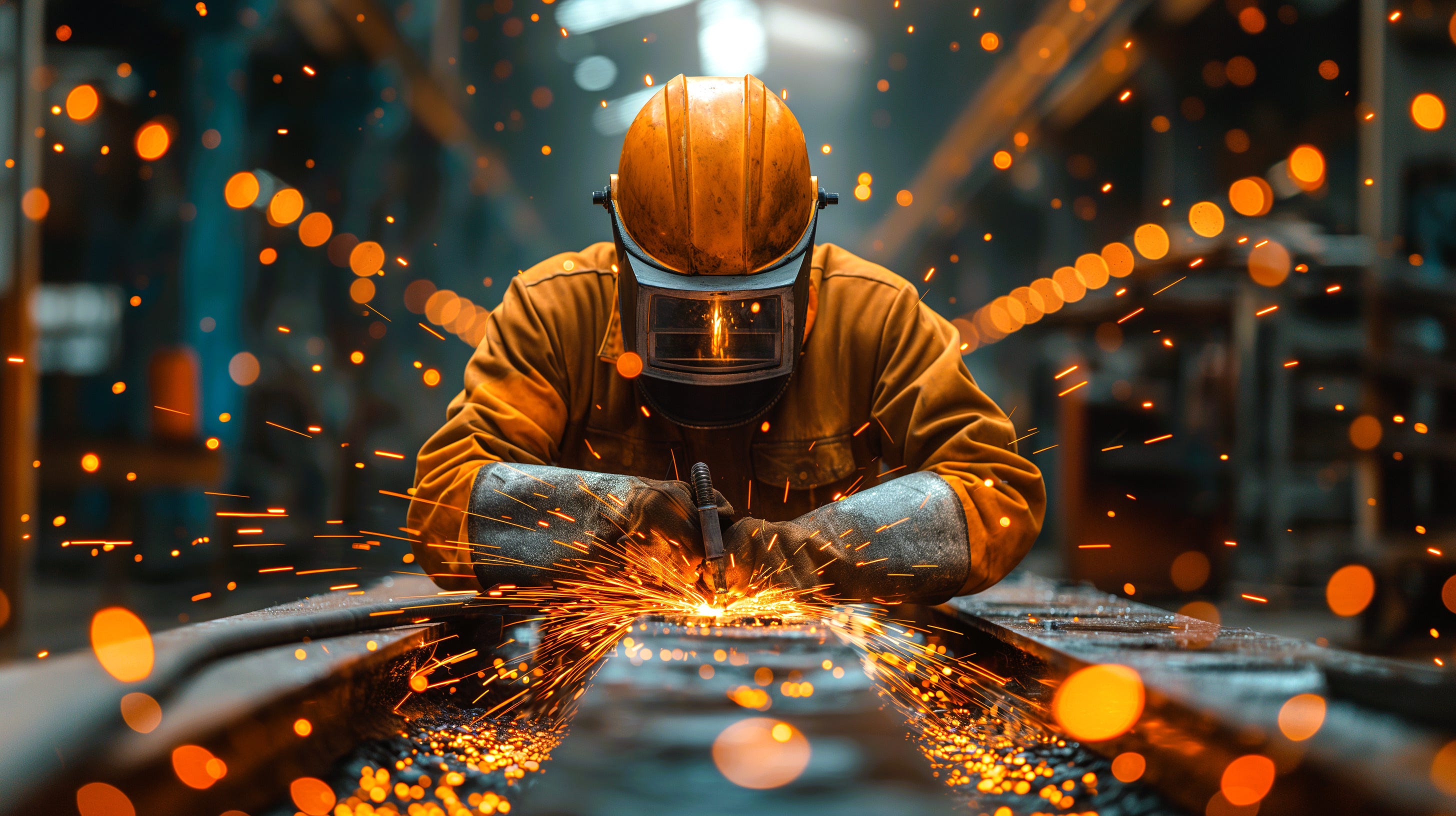
A welder making a perfect TIG weld honors God just as much as a preacher giving a good sermon. This is not because all callings are the same, but because any faithful work in a good vocation is real worship.
Having pushed back on Aquinas, I should clarify: this is not an argument against the contemplative life. We all agree that scholars and theologians have genuine callings. The push back is not contemplation itself, but the hierarchy that subordinates all other work to it. Scripture doesn’t support such a distinction. The Apostle Paul commands believers, “So, whether you eat or drink, or whatever you do, do all to the glory of God.” (1 Cor. 10:31).
WHAT HUGH PROVIDES
Calvin gives dignity to all vocations, but he does not fully explain how to categorize them. If every calling is equally valid, how do we tell them apart? What makes mechanical arts different from liberal arts?
This is where Hugh of St. Victor’s Didascalicon (c. 1127) is helpful. Hugh gave the mechanical arts their most organized treatment in the Middle Ages. He listed seven mechanical arts alongside the seven liberal arts: fabric making, armament, commerce, agriculture, hunting, medicine, and theatrics. Like Aquinas, his system preserved the medieval ranking. However, his recognition that mechanical arts are a separate area of human activity represented a significant departure for his time. What sets him apart is that he understood working with materials, making tools, farming, and building are not just practical needs. They are a basic way people interact with creation.
Today, Hugh’s vision finds new life. For example, Greystone Theological Institute has developed substantial research in the mechanical arts through their Mechanical Arts Program (MAP). Drawing directly from Hugh’s Didascalicon, Greystone recovers the theological significance of skilled craftwork and its essential relationship to creation and vocation.
HOW IRON CROSS RESPONDS
A Reformational understanding retrieves both Hugh’s categorical insight and Calvin’s vocational dignity. Just as Hugh recognized that mechanical arts are a distinct category, and Calvin affirmed that all vocations directly honor God, we recognize that different spheres of life, including family, church, state, arts, commerce, and education, each has its own God-given dignity and purpose. None is reducible to another or exists merely to serve another. Therefore, the mechanical arts aren’t training wheels for “real” intellectual work. They’re a sovereign sphere with their own norms and direct accountability to God.
Our presence in the the Shenandoah Valley affirms that pursuing vocations, whether welding, carpentry, HVAC, or robotics technology, means engaging in real callings, not failed attempts at intellectual work. They’re distinct vocations requiring their own forms of practical wisdom. When young people come to Iron Cross, they are not settling for less. Whether they share our theological convictions, come from different faith backgrounds, or hold no faith at all, they are responding to callings that demand excellence. Our Anglican formation approach does not close our doors; it opens them wider. Students who share our beliefs will find their faith deepened by seeing their work as worship. Those who do not will still experience the dignity that comes from mastering a craft, meeting real needs, and building true skill.
Iron Cross joins other faith-based initiatives recovering the dignity of the trades. Organizations like Servant’s Heart Ministry in Paterson, New Jersey, demonstrate this vision through their Workmanship Program, providing free trades training and mentorship while serving under-resourced communities. These efforts show a growing recognition that the mechanical arts deserve theological attention and institutional support.
We’re committed to this mission in Waynesboro, Virginia, a town that knows what it means to work with your hands. For generations, Waynesboro has been built by craftsmen: machinists at DuPont, furniture makers, tool and die workers, and construction tradesmen.
CONCLUSION
I believe what this town does need is a way to talk about why these trades matter theologically. Why a welder’s work is worship. Why a machinist’s precision is part of fulfilling the cultural mandate. Why mechanical arts are not just backup options, but real callings. Because in the deepest sense, faithful work by God’s people is a form of leitourgia, which is service offered liturgically to God.
In a time when work is often seen only as a way to make money or express yourself, we need to recover the true dignity of vocation. The philosopher-mechanic Matthew Crawford understood this when he wrote Shop Class as Soulcraft. He left a think tank job to open a motorcycle repair shop, discovering that skilled manual work engages the mind and soul in ways that abstract knowledge work often doesn’t.
Why does Iron Cross exist as a faith-based non-profit? Because we believe teaching mechanical arts with Anglican-based formation recovers God’s design for human flourishing: the bold idea that a welder, faithfully doing her job, engages in meaningful work by exercising mastery and contributing good to this Valley.
What Hugh and Aquinas called “servile work,” we recognize as faithful participation in the cultural mandate.
That is not reluctance. That is dignity.
Throughout this essay, “work” refers to the cultural mandate of Genesis 1:28, humanity’s calling to cultivate and steward creation; not to works-righteousness or merit before God.